
September 10, 2024
Auriculotherapy for Beginners
A point-location and ear-anatomy primer

What is auriculotherapy?
Auriculotherapy, or ear acupuncture, works with points on the auricle (external ear). Those points are mapped as a reflex system of the whole body.
Two main map traditions are in use: Chinese ear charts, and the French system developed by Dr. Paul Nogier. They do not label the ear the same way, so a point on one chart is not always in the same place on the other.
Auriculo 360 puts both systems on a rotatable 3D ear so you can locate a point instead of guessing from a flat chart.
Ear anatomy zones
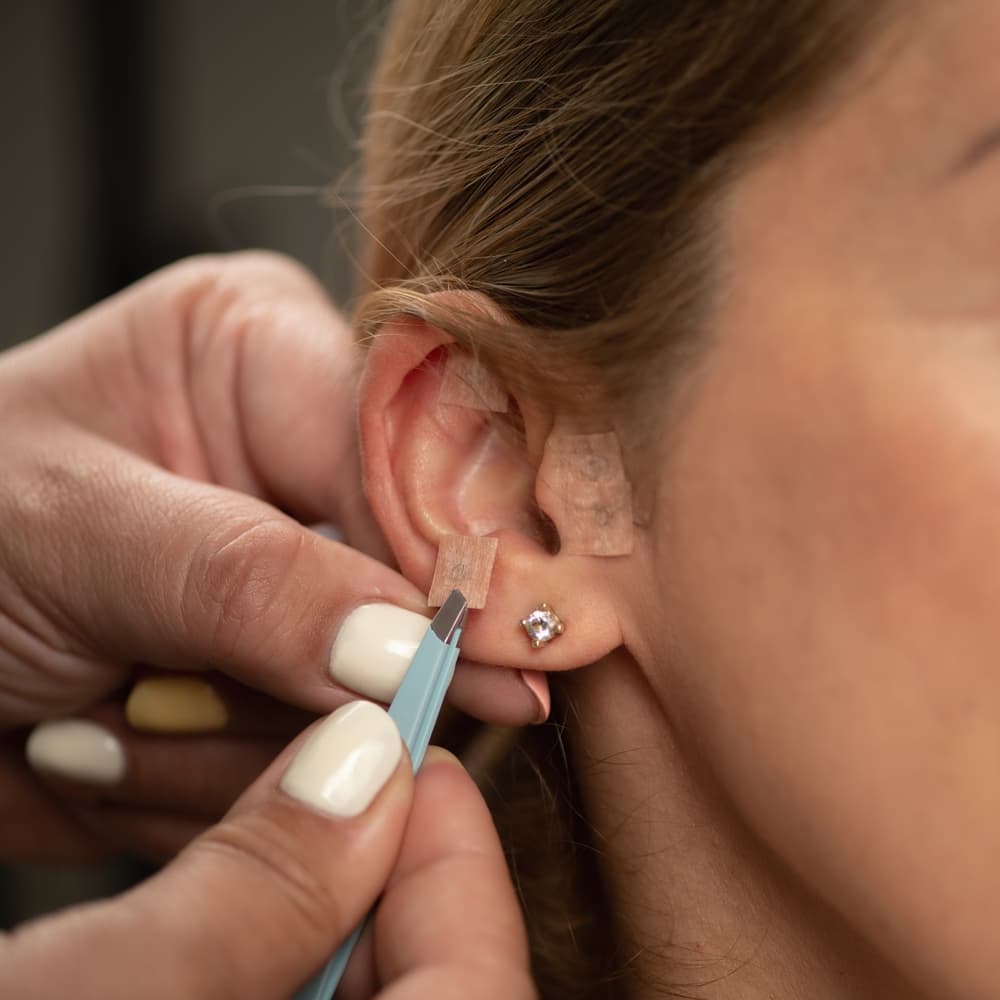
Before looking up a named point, learn the zones of the auricle: the lobe, helix, antihelix, tragus, antitragus, concha, and the inner surface behind the ridge.
Charts divide those zones further. A zone name tells you which part of the ear to search. The exact spot still depends on the ear in front of you.
How Chinese and French maps differ
Chinese ear maps grew out of Traditional Chinese Medicine and name many points for body regions and channels.
In the 1950s, Dr. Paul Nogier of Lyon expanded that work into a somatotopic map: the ear as a small layout of the whole body, often described as an inverted figure.
Auriculo 360 keeps both systems, including Nogier phases, so you can switch maps without leaving the 3D ear.
How to locate points
Reference locations are approximate. Ears differ in size and fold.
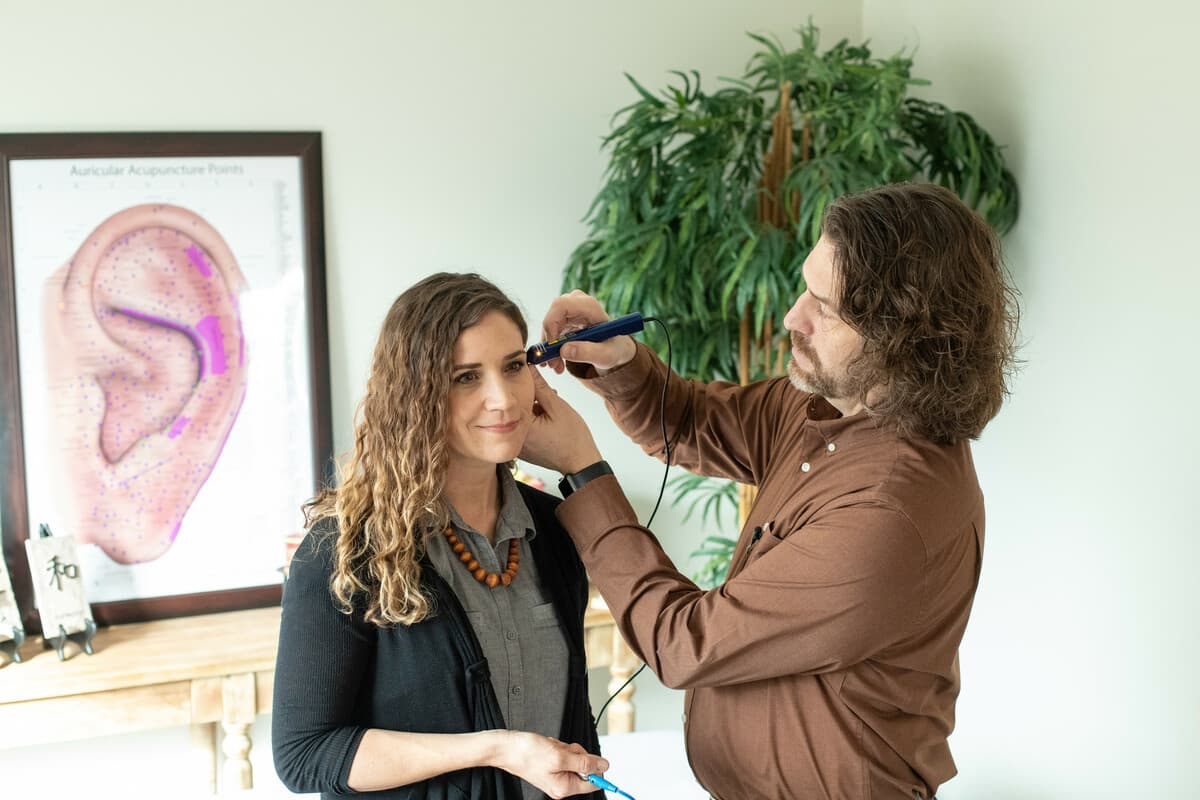
Practitioners look for active points: spots that are pressure-sensitive, or spots found with an electrical point detector. They do not use every printed point on a chart.
Master points are a small set used often. Learn where they sit, then find the same names in Auriculo 360 and rotate the ear until the point matches the anatomy you see.
Practitioners often work with one ear per session. The software can flip left and right when a chart assumes one side.
Stimulation methods
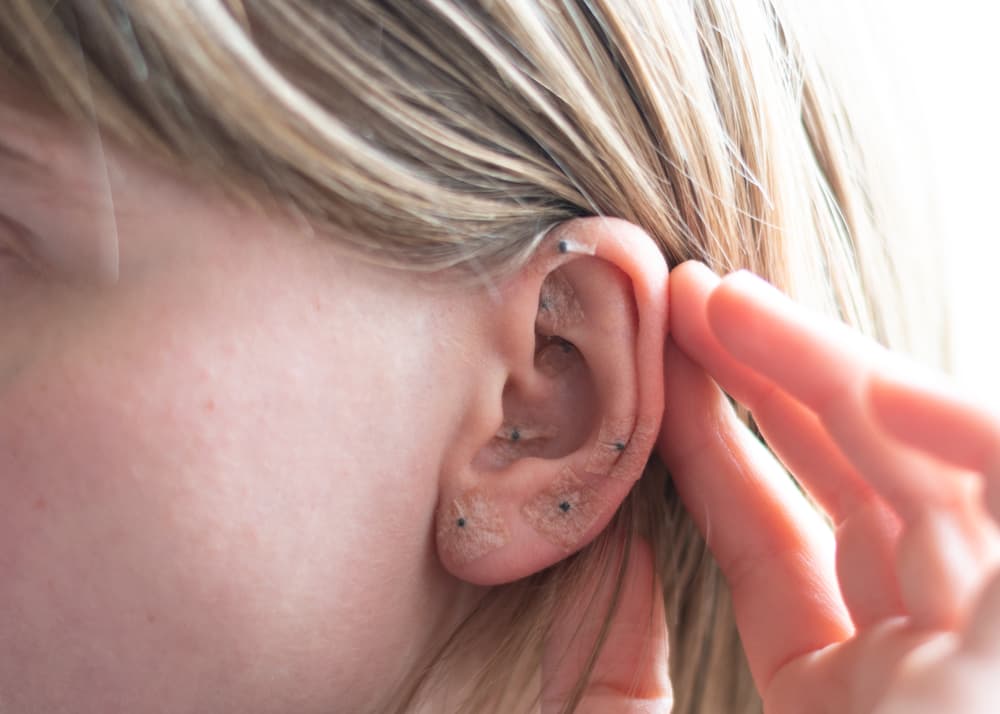
Once a point is located, common stimulation methods are needles, pressure (including ear seeds and pellets), lasers, magnets, and electrical stimulation.
Auriculo 360 is the map. It shows where the point is, the protocol it belongs to, and your own notes. It does not choose a method for you.
Watch the beginners class
A recorded Auriculotherapy for Beginners class is on this site. It walks through point location in order. Watch it alongside this guide.
Watch the recorded class. When a point or protocol is named, look it up in Auriculo 360.
- Watch the class recording.
- When a point or protocol is named, find it on the 3D ear in Auriculo 360.
- Start a free trial if you do not have an account yet.
Locate the point in Auriculo 360
Search for a point or protocol, open it on the 3D ear, and rotate until it matches the ear you are studying.
Save your own notes and protocols. They sync across phone, tablet, and computer.
Find your first point in the next five minutes.
Start the trial, open it on your phone, and look up a point you used this week. That's the whole test.